
Classical Pranayama Classes & Courses In India
Pranayama as the Hatha Yoga Pradipika teaches it: the central practice of classical yoga, regulating vital energy through controlled breath. The bridge between physical practice and meditation that most contemporary yoga ignores entirely. Private 1 on 1 classical pranayama classes and courses in-person in India or online to help you cultivate a practice that truly integrates body, breath, and mind.
"The mind is the king of the senses but the breath is the king of the mind. Control the breath and you also control the mind." — Hatha Yoga Pradipika
Welcome to Pranayama India.
If you’re here, you didn’t arrive here by chance.
You’ve likely outgrown your asana practice. You might have questioned what yoga has become. You’ve seen through the performance of modern breathwork and the wellness industry — the white linen, the trained voice, the unison inhale, the supposed trauma healing that has nothing to do with the breath.
You already know there’s more to the breath than that. You’ve known it for a while.
You were not searching for “breathwork classes” online. You were looking for the thing the breathwork was supposed to be a doorway to. But you didn’t know what it was.
Pranayama is that doorway. Pranayama is what you were searching for.
The science of the breath developed and refined in India over thousands of years, held by lineages long before “breathwork” became a marketing word. Technical and precise. Taught individually.
It asks something of you — discipline, patience, a willingness to sit with your own nervous system without performing your way out of it.
This is what you will learn here, classical pranayama, in its purest form. Not the kind of breathing exercises that promises you’ll heal your past trauma on Friday and “manifest” your destiny by Sunday. The kind that actually changes how your nervous system, your mind, and your breath relate to each other — slowly, progressively, and honestly.
If that sounds like work rather than a wellness retreat photo op, you’re in the right place and are welcomed.
Beginner
The starting point. The techniques that everything else is built on — Kapalabhati, Nadi Shodhana, Ujjayi — taught with correct technique, correct sequencing, and an explanation of why, not just how. No “just breathe and feel the vibes.”
Advanced
For practitioners who want to go further: breath retention (kumbhaka), the relationship between pranayama and meditation, and the subtler techniques that most teachers never reach because most students never stay long enough to be taught them.
Retreats
Multi-day intensives held on the Goan coast or in the Himalayan foothills — the two places this practice actually lives in. Structured daily practice, real instruction, and enough silence to hear what your breath has been trying to tell you.
What practicing in India actually means
This isn’t Ubud. Infrastructure is basic. Accommodations are simple—clean, functional, often with local families rather than hotels. Roads fail. Power cuts happen. Internet is unreliable. In the mountains, altitude sickness is real. Bureaucracy is Byzantine. The culture doesn’t cater to Western comfort expectations.
The friction is part of what makes practice here different from sanitized Western versions. You negotiate with reality as it is, not as wellness marketing promised it would be.
India’s spiritual tourism industry has become its own dilution—ashrams that function as hotels, “authentic” programs designed for foreigners who want experience without difficulty, yoga teacher trainings based on American standards that certify hundreds while teaching little.
We don’t operate in that ecosystem. No fixed establishment, group courses, or certificates. Private transmission in remote locations for practitioners willing to meet the teachings without buffering.
who is this for:
Practitioners seeking pranayama where it originated, willing to negotiate with infrastructure limitations, cultural differences, and the reality that authentic practice in India looks nothing like the commercialized version exported to the West.
This is for the practitioner who has already done the Western version of yoga, already bought the essential oils, already sat through a breathwork session that ended in performative tears and a group hug — and walked out feeling like something was missing.
It’s for the ones who suspect that the missing piece was never going to be found in a room full of white linen.
It’s for people who want to learn pranayama in India, from a teacher who was trained over decades of practice in the traditional lineage rather than in a weekend certification mill, and who want a structured path — not a single transcendent Tuesday afternoon ceremony, but an actual practice they can carry for the rest of their life.
Who this isn't for:
This is probably not for you if you’re looking for a quick fix, a single ecstatic session that solves everything, or an aesthetic to post about. We won’t pretend those things. We’d rather lose you at the homepage than waste your time in the classroom.
Those expecting Western amenities, predictable logistics, or resort-style comfort. Those unwilling to adapt to Indian bureaucracy, infrastructure gaps, or cultural norms that don’t prioritize foreign convenience. Those seeking yoga tourism rather than transmission.
India is where these teachings come from. We return them to that context—not perfectly, not comfortably, but honestly.
About
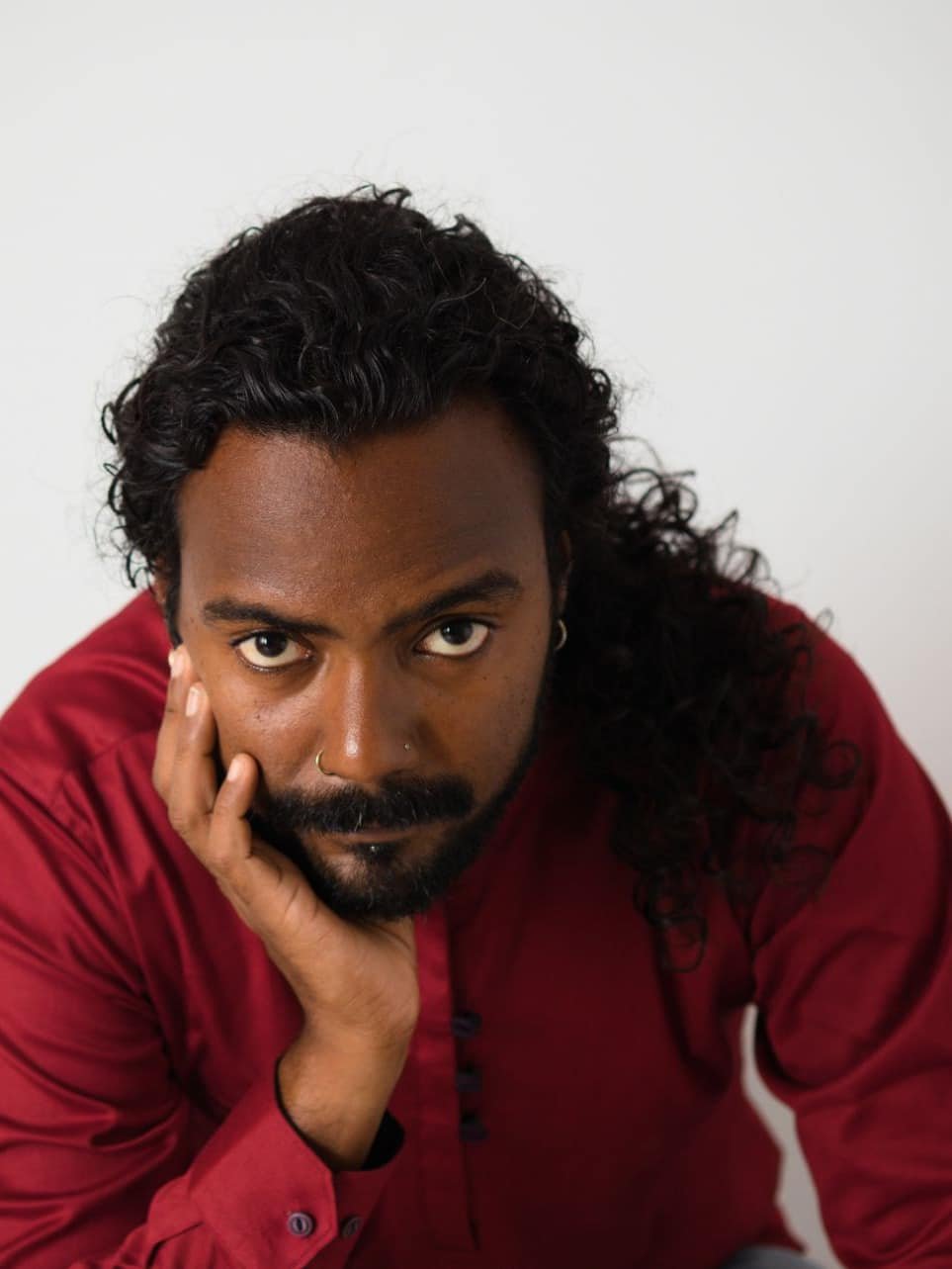
Hi, thank you for dropping by, my name is Alexandre Latour, and I’m the teacher behind Shakaizen.
Fifth generation Indian, I was born and raised in Mauritius by my single mother who lulled me with stories from the Mahabharata, an epic of ancient India, and had me exposed to yoga philosophy from an early age.
I grew up an introvert more interested in knowledge regarding the meaning of life and death than in earning a university degree. I dropped out of high school, started studying yoga philosophy, and practiced yoga postures rigorously.
I found myself teaching at the age of 21, and for nearly a decade I traveled the world as an asana and pranayama teacher, teaching audiences of different cultural backgrounds and ability levels.
what you receive from a class with me
a teacher who is Knowledgeable And experienced
"The sources of right knowledge are direct perception, inference and scriptural testimony." — Yoga Sutra 1.7
The yoga industry has reached a point of over-saturation with hundreds of thousands of undertrained yoga teachers, and more being rapidly certified in just 5 weeks through the Yoga Alliance’s 200-hour and 500-hour yoga teacher training courses all over the world.
I am blessed to have been exposed to an undiluted source of yogic knowledge very early in my life. In me you’ll find a teacher whose knowledge of yoga has not been diluted by the industry, whose experience of the practice has been gained from decades of real-life commitment, and whose pedagogy has been polished over 10000 hours of real teaching classes.
Teachings that are Authentic And new age free
"Misconception occurs when knowledge of something is not based upon its true form." — Yoga Sutra 1.8
Most yoga teachers nowadays often intertwined their teachings with new-age pseudo-practices that have no relation or utility whatsoever with yoga and meditation. Crystal healing, sound healing, breathwork, full moon ceremonies, chakra alignment, these have become common offerings in yoga retreats.
I’m a musician and dancer myself, but when I make music, I make music. When I dance, I dance. When I teach about yoga, I teach about yoga, not music or dancing. There is so much already to learn about yoga, yet so little time to practice what we have learned. I won’t add further distractions.
an environment for inner growth
"The yogi should concentrate constantly on the Self, remaining in solitude, alone, with controlled mind and body, having no desires and free from material acquisitiveness." — Bhagavad Gita 6.10
Yoga and meditation retreats have become social gatherings, where quite often you’ll find yourself putting as much effort to socialize as in your actual practice.
My retreats are designed to provide a close-to-ideal environment for introspection and inner growth. For that to happen, I consciously limit every retreat to a maximum of four participants and will still conduct it with equal passion even if there is only one person.
Joining a retreat with me means you won’t be treated like a number in a group of 15+ persons that you’ll feel forced to interact with. Instead, you’ll receive personalized attention, meaningful interaction, and a high level of commitment from someone genuinely interested in your learning experience and progress.
an approach that makes you autonomous
"Practice becomes firmly grounded when well attended to for a long time, with reverence and without break." — Yoga Sutra 1.14
My teaching philosophy is centered on empowering you to become self-reliant in your practice. Unlike most yoga classes where you just follow the lead of an instructor for an hour or so, without gaining no real understanding of the practice, the classes in my retreats are conducted in a way to provide you with the tools, knowledge, and techniques necessary to continue your journey independently.
You will leave the retreat not only with enhanced skills and understanding but also with the confidence to maintain and develop your practice on your own. This self-sufficiency is a crucial aspect of the learning experience I offer, ensuring that the benefits of the retreat extend well beyond our time together.